












The Algorithmic Condition: Freedom, Meaning, and the Mechanization of the Self
In the modern world, the algorithm has become the invisible architecture of our lives. It decides what we see, what we desire, and even how we feel. It is the new oracle — opaque, data-driven, and precise — promising to save us from the burden of choice. But in that promise lies its deepest danger. The algorithm may not only shape our behavior; it may also reconfigure what it means to be human.
I. Sartre and the Seduction of Bad Faith
Jean-Paul Sartre once warned that human beings are “condemned to be free.” We are thrust into existence without instruction, forced to invent ourselves through our choices. Yet this freedom is also anguish — an endless confrontation with uncertainty. The algorithm offers a soothing escape: it tells us what to read, what to buy, whom to love. In surrendering to it, we are relieved from the anxiety of freedom.
But Sartre would call this bad faith — a denial of our own agency. By letting the machine decide, we live as though our essence were already written in the data. We become things — predictable, optimized, efficient — instead of beings-for-themselves, always capable of transcendence. The algorithm does not oppress us overtly; rather, it whispers, “You need not choose — I will choose for you.” And we obey.
II. Camus and the Comfort Against Absurdity
Albert Camus described the modern man’s condition as absurd: we seek meaning in a world that offers none. His hero is the rebel — one who faces the absurd without illusion, who lives without appeal. Yet algorithms fill the silence that Camus cherished. They erase the encounter with nothingness through an endless stream of stimulation — notifications, recommendations, the infinite scroll.
Instead of confronting life’s absurdity, we are lulled into algorithmic comfort. The rebellion Camus spoke of — the refusal to be consoled by false meaning — is replaced by submission to automated distraction. The absurd is no longer felt because the algorithm ensures we never face it alone. We have traded lucidity for content.
III. Dostoevsky and the Revolt of the Underground
Long before algorithms, Dostoevsky foresaw their logic. In Notes from Underground, his antihero rails against the utopian dream of a society governed by rational calculation — the “Crystal Palace,” where all human behavior can be predicted and optimized. “Man,” he insists, “wants the right to desire what is bad for him.”
In the algorithmic age, Dostoevsky’s prophecy has come true. The data scientist replaces the social engineer, but the dream remains: to quantify the soul. Yet the Underground Man’s defiance endures — that irrational cry for freedom, the right to act against the numbers. He would sabotage the algorithm simply to prove he could. His rebellion is not practical; it is existential. It declares that human freedom begins precisely where prediction fails.
IV. Heidegger and the Forgetting of Being
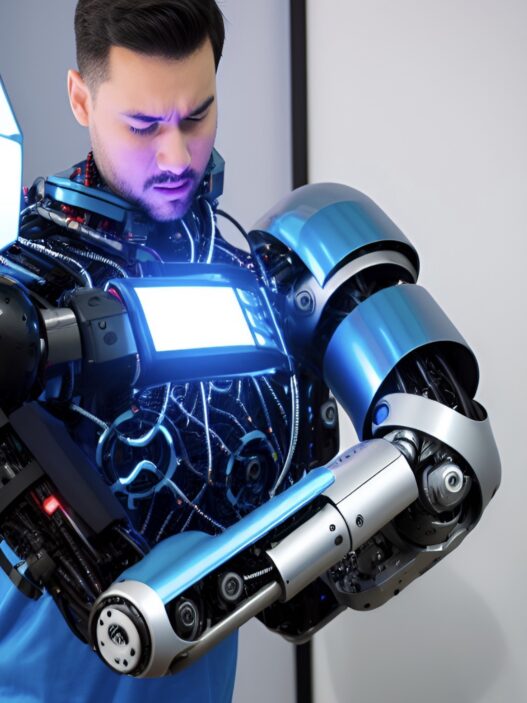
For Martin Heidegger, technology is not merely a tool; it is a way of revealing — it teaches us how to see the world. Modern technology, he warned, “enframes” reality, reducing everything to resources for use, to data for processing. Under algorithmic logic, even our emotions, desires, and identities become metrics to optimize.
We begin to think of ourselves as information systems — measurable, improvable, replaceable. In doing so, we forget Being itself. Heidegger’s fear was not that machines would overpower us, but that they would redefine the meaning of existence so thoroughly that we would forget it ever had another form.
V. Kierkegaard and the Vanishing Self
Søren Kierkegaard wrote of the crowd as the most dangerous of all powers — because it erases individuality and reflection. The algorithm is the digital crowd: it knows what people like and makes sure you like it too. It creates an illusion of infinite choice, but only within the narrow boundaries of statistical similarity.
Kierkegaard would see the algorithmic life as one lived in despair — the despair of not willing to be oneself. The self becomes an echo of aggregated preferences, a being-for-the-algorithm. True selfhood requires inwardness, the courage to stand apart. But when every gesture is measured by engagement and every thought by popularity, inwardness becomes impossible.
VI. The Quiet Catastrophe
The algorithm does not command, it suggests. It does not enslave, it entices. This is why its domination feels so benign. Yet beneath this gentleness lies a quiet catastrophe — the fading of freedom, the loss of solitude, the death of mystery. We are no longer opaque even to ourselves; we have become transparent, predictable, marketable.
In this sense, the algorithmic condition is not only technological but existential. It challenges the very qualities that define the human spirit: ambiguity, contradiction, unpredictability, longing. To live fully is to live against the grain of what can be calculated.
VII. Toward a New Freedom
The task, then, is not to destroy the algorithm but to awaken within it — to reclaim the capacity for authentic choice, for moments that resist optimization. To listen to silence instead of noise. To desire what cannot be measured.
Freedom, in the age of the algorithm, is not found in rejecting technology but in refusing to let it define the horizon of the possible. It is to remain, as Camus’s rebel or Dostoevsky’s Underground Man, a being who chooses meaning over mechanism — who insists, even amid perfect prediction, on the beautiful risk of being human.