



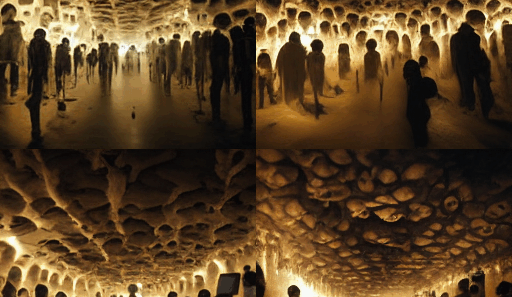














Embracing the absurd as a reality of life means accepting that the world lacks inherent meaning, that our deepest desires for coherence, justice, or clarity collide with a universe that remains silent. This isn’t a pessimistic stance—it’s a philosophical awakening. And no three thinkers illuminate this awakening better than Kafka, Camus, and Sartre, each giving a different doorway into the same existential tension.
Below is a clear, integrated framework that links all three.
1. What Does It Mean to Embrace the Absurd?
To embrace the absurd is to recognize:
Life has no pre-given meaning .Human beings still hunger for meaning. The conflict between these two facts = the absurd (Camus’s definition)
To embrace it means:
Not running from this tension Not hiding behind illusion, religion, social roles, or false certainty Living with wakefulness, freedom, and responsibility despite the lack of guarantees
2. Kafka: The Absurd as the Felt Texture of Life
Kafka shows the absurd from the inside—as experience rather than theory.
Key themes
Bureaucracy becomes fate Identity becomes unstable Meaning evaporates precisely where we expect it (law, justice, work)
In Kafka, the absurd is haunting and unresolved.
There is no explanation, no escape, and no rebellion—only the oppressive experience of being trapped in systems that don’t answer.
Kafka’s lesson for embracing the absurd
Accept that life’s structures may be opaque Stop expecting the world to “make sense” Learn to endure uncertainty without collapsing
Kafka teaches emotional honesty: “This is how it feels inside the absurd.”
3. Camus: The Absurd as a Call to Rebel and Live Intensely
For Camus, absurdity is not defeat—it is the beginning of clarity.
Camus’s structure of the absurd
The human need for meaning The universe’s silence The confrontation between them = the absurd
Camus argues that once we recognize this, we can choose:
Revolt (continue living, lucidly, without consolation) Freedom (no metaphysical restraints, values must be created) Passion (live fully because nothing is guaranteed)
Camus’s lesson for embracing the absurd
Don’t look for “ultimate purpose” Create your own meaning through action and intensity Live in a state of constant rebellion against nihilism
Where Kafka gives the sensation of suffocation, Camus gives the attitude needed to breathe inside it.
4. Sartre: The Absurd as the Condition for Radical Freedom
Sartre agrees that the world has no built-in meaning. But he goes further:
Sartre’s key idea
Humans are “condemned to be free” Because there is no God or fixed nature, we are fully responsible for the meanings we choose Absurdity is what makes freedom possible
Unlike Camus, Sartre focuses not on rebellion but on creation:
You choose your values You define your essence through action Life becomes a project, not a puzzle
Sartre’s lesson for embracing the absurd
Accept that meaning is your job Avoid bad faith (lying to yourself to escape freedom) Use absurdity as the basis for authentic action
Sartre turns absurdity into radical responsibility.
5. Bringing Them Together: A Unified Guide to Embracing the Absurd
You can structure your understanding like this:
Kafka → Camus → Sartre
1. Kafka: Feel it
You experience the absurd as confusion, alienation, and incomprehensibility.
This is existential sensitivity.
2. Camus: Acknowledge it
You recognize the absurd clearly and choose revolt rather than escape.
This is existential courage.
3. Sartre: Act within it
You take responsibility for giving your life meaning through choice.
This is existential freedom.
In short:
Kafka teaches the texture Camus teaches the attitude Sartre teaches the action
Together they map the process of embracing absurdity:
“Life doesn’t make sense.” (Kafka) “But I will live passionately anyway.” (Camus) “And I will create my own meaning.” (Sartre)
6. How to Practice This in Your Own Life
Here’s how to translate these philosophies into day-to-day living:
Kafka: Let go of the need for explanations
Accept that some situations will stay opaque Stop demanding fairness from the world Allow uncertainty to coexist with clarity of action
Camus: Live as revolt
Say yes to life even when it feels pointless Lean into joy, creation, love, and connection without relying on cosmic meaning Practice present-moment intensity
Sartre: Choose deliberately
Make decisions that reflect values you’ve consciously chosen Notice when you fall into “bad faith” (pretending you have no choice) Take responsibility for your projects