



















People often cite the line, “With great power comes great responsibility,” typically attributing it to Uncle Ben from Spider-Man, though its spirit predates him by centuries. Voltaire and other Enlightenment thinkers articulated similar notions, reminding us that cultural wisdom is rarely born in a single moment—it accumulates across history.
Another statement that has stayed with me, first encountered in Robbins’ Pathology, is: “It is irrational to think that man is rational.” Though phrased like a modern critique, the idea itself echoes across the intellectual landscape—from Freud’s theory of unconscious drives to Kahneman’s cognitive biases. Human beings are not rational creatures who sometimes feel; we are emotional, unconscious, symbolic beings who occasionally manage to reason.
This becomes even clearer when we connect it with the great literary and philosophical minds of Kafka, Camus, and Dostoevsky, each of whom examined the tension between human irrationality and the fragile scaffolding of reason.
Kafka: The Absurd Machinery of Fear
Kafka’s world is built not on rationality but on its collapse.
Characters like Gregor Samsa or Josef K. are thrust into situations where the rules are opaque, logic dissolves, and the machinery of existence grinds on without explanation.
Kafka illuminates a key truth:
Irrational fears often emerge from environments that refuse to make sense.
A person encountering anxiety or dread is not necessarily disordered; they are often responding to a world that is itself incomprehensible. In Kafka, the irrational is not a personal failing but a structural condition of human life.
Thus, irrational fears are not signs of pathology—they are reflections of a reality that frequently offers no clarity, no stability, and no reassurance.
Camus: The Absurd and the Revolt Against Irrationality
Camus’ philosophy begins from the recognition that the world is inherently absurd—not because it is chaotic, but because it is indifferent.
Human beings crave meaning, coherence, and purpose, but the universe offers silence in return.
The irrational lies in this mismatch:
We desire clarity. The world gives us none. Yet we continue to search.
For Camus, to feel fear, confusion, or existential unease is not pathological—it is a sign that one is awake to the absurdity of life.
Pathology arises only when this fear paralyzes, when one is no longer capable of Camus’ “revolt”—the act of continuing to live and choose even in a meaningless world.
Thus, irrational fears only become concerning when they extinguish one’s ability to respond, to act, or to create meaning.
Dostoevsky: The Underground, the Unconscious, and the Irrational Soul
Dostoevsky understood irrationality from the inside. His characters seethe with contradictory desires, paralyzing fears, and subterranean impulses.
The Underground Man obsessively analyzes every motive yet acts against his own interests. Raskolnikov commits murder under a theory of rational superiority, only to be undone by guilt, dream imagery, and spiritual unrest. Ivan Karamazov’s intellectualism collapses under the weight of hallucination, delirium, and moral anguish.
Dostoevsky shows that irrationality is not a defect—it is the native language of the human soul.
People do not always fear what is dangerous or desire what is good for them. We are pulled by guilt, pride, jealousy, insecurity, unconscious trauma, and the deep hunger for meaning.
He makes a crucial distinction:
Everyone harbors irrational impulses, but suffering begins when one becomes possessed by them—when an idea, fear, or guilt becomes tyrannical and eclipses the rest of one’s being.
This mirrors exactly the clinical truth:
Irrational fears become pathological only when they monopolize the psyche.
Bringing It All Together
Kafka exposes the irrationality of the external world.
Camus exposes the irrationality of meaning-seeking in an indifferent universe.
Dostoevsky exposes the irrationality within the individual soul.
Together, they reinforce one central insight:
To be human is to be irrational.
Irrational fears, doubts, and impulses are not aberrations; they are signatures of existence.
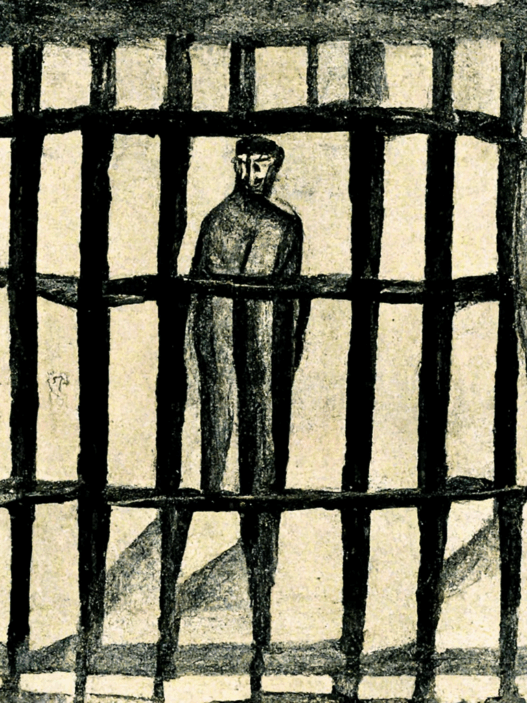
But there is a threshold—one clearly visible in psychiatry and in literature alike—where irrationality stops being a facet of humanity and becomes a form of bondage.
It is only when these fears hijack the person—when they dominate actions, distort perceptions, and narrow the scope of life—that help becomes necessary.
Recognizing this continuity between literature, philosophy, and psychology offers a compassionate and realistic framework:
We are all irrational, but we need support only when irrationality becomes our master rather than our companion.



“This was such a thought-provoking read! I especially appreciated how you tied in cognitive biases and fear.
It really makes you rethink how you make daily decisions.”